
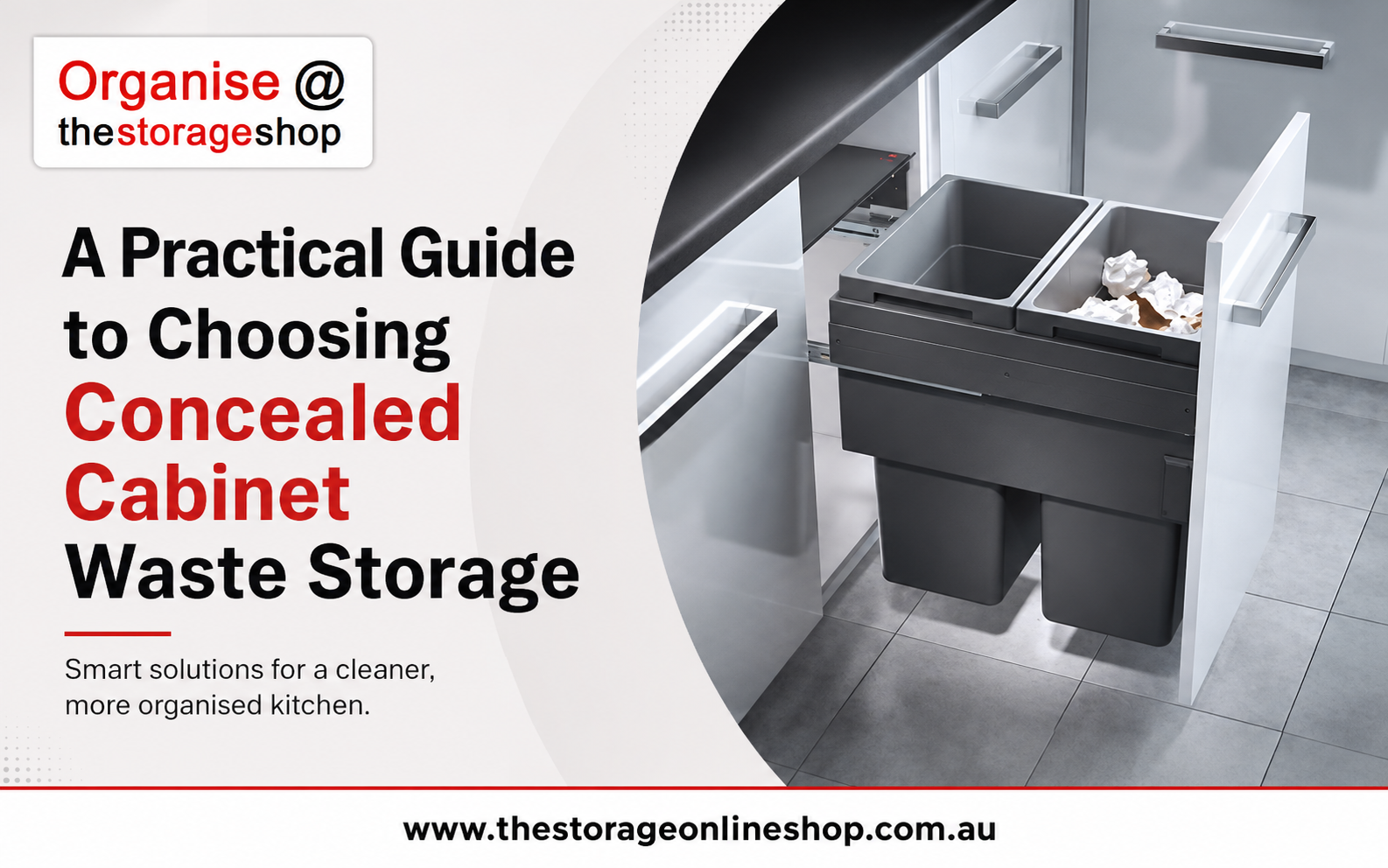
A concealed waste system can improve the appearance and function of a kitchen, but only when it fits the cabinet and the household routine. Products vary in mounting style, bucket size, opening movement and installation needs. A pull out bin under sink may be ideal for one kitchen yet completely unsuitable for another because of plumbing, hinges or limited internal height.
This guide focuses on the practical checks that should happen before buying. Careful measurement and realistic capacity planning can prevent common problems such as blocked runners, doors that will not close, buckets that cannot be removed and compartments that are too small for everyday waste.
Decide Where the Waste System Should Go
The best position is usually near the main preparation or clean-up area. When the bin is close to the chopping board, sink or dishwasher, scraps and packaging can be cleared with fewer steps. This also reduces the temptation to leave rubbish on the benchtop.
Consider the surrounding room as well as the cabinet interior. A sliding frame may fit perfectly inside the cupboard but block a narrow walkway when extended. A door-mounted product needs enough room for the door to swing fully. Nearby handles, appliances and island benches can affect access.
Review the Available Cabinet Options
Possible locations include:
- A base cabinet beside the preparation area.
- The cupboard beneath the sink.
- A narrow cabinet near the pantry.
- A cabinet close to the dishwasher.
Choose the position that supports daily movement, not simply the first empty cupboard.
Measure the Interior, Not Just the Door
Cabinets are often described by a nominal width, but the clear internal space is smaller. Side panels, hinges and door frames reduce the opening. Measure the narrowest usable width, the internal depth and the available height.
Take measurements at several points because older cabinets may not be perfectly square. Record anything that projects into the space, including hinges, pipes, shelves, filters, power points and structural rails.
Allow for Movement and Bucket Removal
A concealed bin must do more than sit inside the cabinet. It needs to travel through its entire opening path. Check that the runner frame, lid and buckets will not strike plumbing or hardware.
Find out how the buckets are removed. Some lift straight upward and need clear space beneath the benchtop. Others can be removed only when the frame is fully extended. A correct stationary fit is not enough if the container cannot be emptied conveniently.
Choose an Opening and Mounting Style
Concealed products generally fall into several groups: loose in-cupboard buckets, sliding frames, door-mounted containers and door-operated systems. Each creates a different user experience.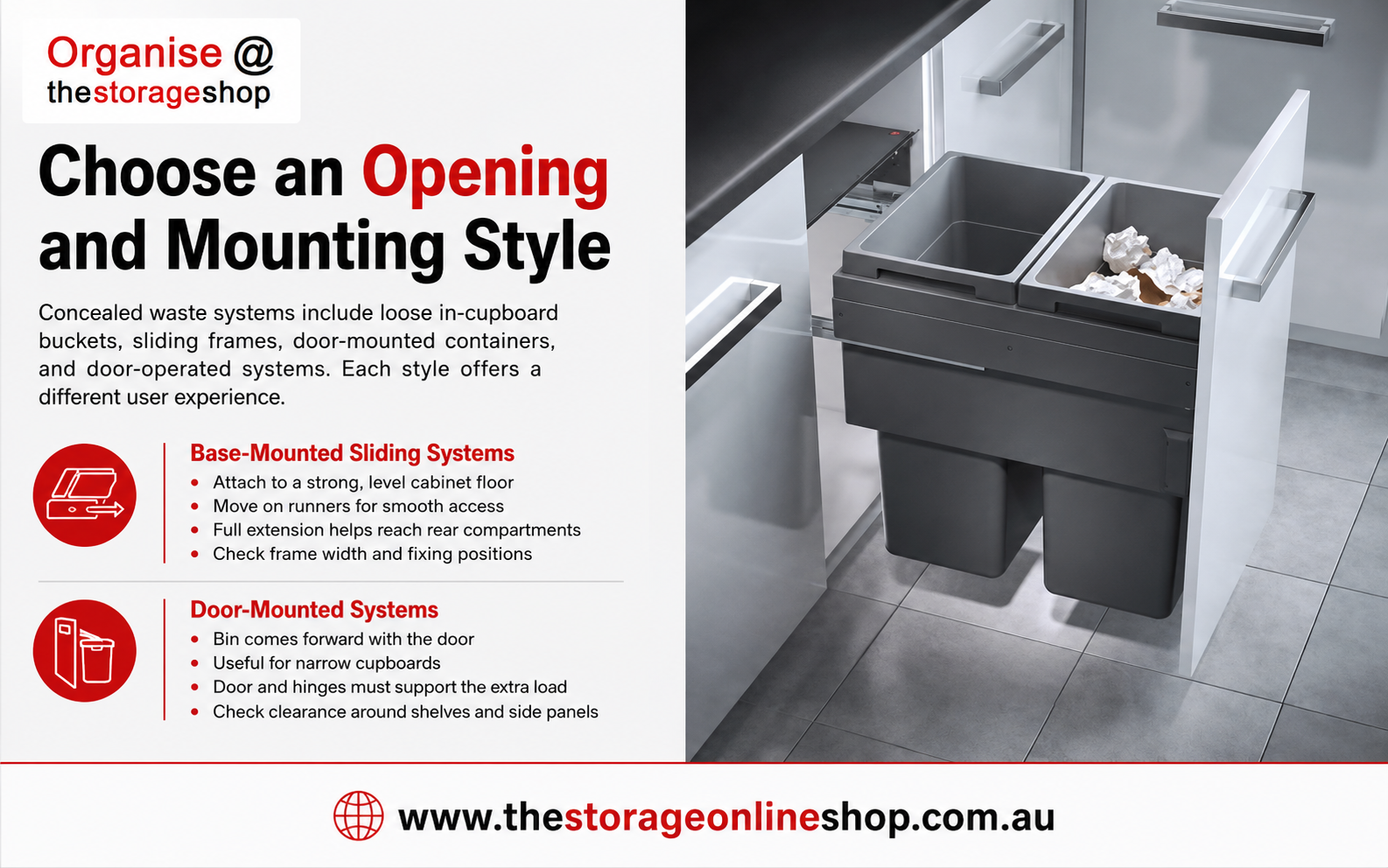
A loose bucket is flexible but requires bending. A sliding system brings containers forward, while door-mounted or door-operated designs move as the cabinet door is used.
Base-Mounted Sliding Systems
Base-mounted frames attach to a strong, level cabinet floor and move on runners. Full extension improves access to rear compartments. Check frame width and fixing positions, especially when the base panel is thin or has raised edges.
Door-Mounted Systems
A door mounted bin provides direct access because the container comes forward with the door. This can suit a narrow cupboard or a household that wants a simple one-motion opening action.
The cabinet door and hinges must support the additional load. Check product limits and confirm that the container clears shelves and side panels throughout the swing. Decorative frames, internal hinges and unusually narrow doors may restrict compatibility.
Select a Useful Capacity
The total litre figure is important, but it should not be the only deciding factor. Think about how often waste is emptied, how much recycling the household produces and whether food scraps are separated.
A larger bucket reduces emptying frequency, but it becomes heavier and may keep food waste indoors longer. Smaller containers are easier to carry and clean, although they require more regular attention.
Match Compartments to the Sorting Routine
A single compartment maximises capacity for one waste stream. Two buckets commonly separate general rubbish and recycling. Three or more compartments can support food scraps or refundable containers, but the individual buckets become smaller.
Ask the following questions:
- Which type of waste fills fastest?
- Are the buckets wide enough for common packaging?
- Will standard liners fit securely?
- Can each full bucket be lifted comfortably?
- Is a lid needed for food waste?
- Will everyone understand the sorting arrangement?
A complicated system does not automatically create better recycling. The configuration should be simple enough for every household member to use consistently.
Examine the Runner and Lid Design
A sliding system carries significant weight when its buckets are full. The frame should remain stable when extended and move smoothly without twisting. Full-extension runners improve access, while soft-closing movement may reduce noise and slamming.
A fixed lid stays inside the cabinet, while an attached lid travels with the container. Consider odour control, height and cleaning access. Do not overfill bags, as rubbish can catch or fall behind the mechanism.
Check Cleaning and Maintenance
Removable buckets with smooth surfaces are usually easiest to maintain. Avoid designs with inaccessible corners where crumbs and liquid can collect. The frame should allow the cabinet floor to be reached for occasional cleaning.
Use fitted liners and empty food waste regularly. Wash buckets with mild detergent, dry them fully and wipe the frame with a damp cloth. Do not saturate runners or use harsh cleaners unless the manufacturer permits them.
Keep replacement liners nearby so the maintenance routine remains quick and easy to follow.
Consider Installation Before Ordering
Read the installation information before purchasing. Confirm whether the unit attaches to the base, sides or door and whether a cabinet front is connected to the frame. Check the tools, fixings and clearances required.
Repair water damage, loose hinges or an uneven base before installation. In a renovation, select the waste system early so cabinet size, door style and clearances can be planned around it.
Why Choose The Storage Online Shop?
The Storage Online Shop provides cabinet, pullout, door-mounted, door-operated and freestanding waste solutions within a dedicated kitchen-bin category. Its wider range includes kitchen interiors and home-organisation products, enabling customers to compare related storage options in one online shop. The website also provides Australia-wide delivery information and product listings with dimensions and configurations to support selection.
Use a Final Buying Checklist
Before placing an order, confirm the internal width, depth and height; note every obstruction; check the mounting surface; review bucket-removal clearance; choose a realistic capacity; and verify that the opening movement will not block the room. Also consider cleaning access and liner availability.
A carefully chosen pull out cupboard bin should fit securely, move smoothly and support the way the household already handles rubbish and recycling. Matching the product to real cabinet dimensions and daily habits is more important than selecting the largest or most feature-rich model.
Concealed waste storage is a practical investment when it makes disposal simpler and keeps the kitchen visually calm. Measure carefully, compare mechanisms and choose a configuration that will remain easy to use, empty and clean.