
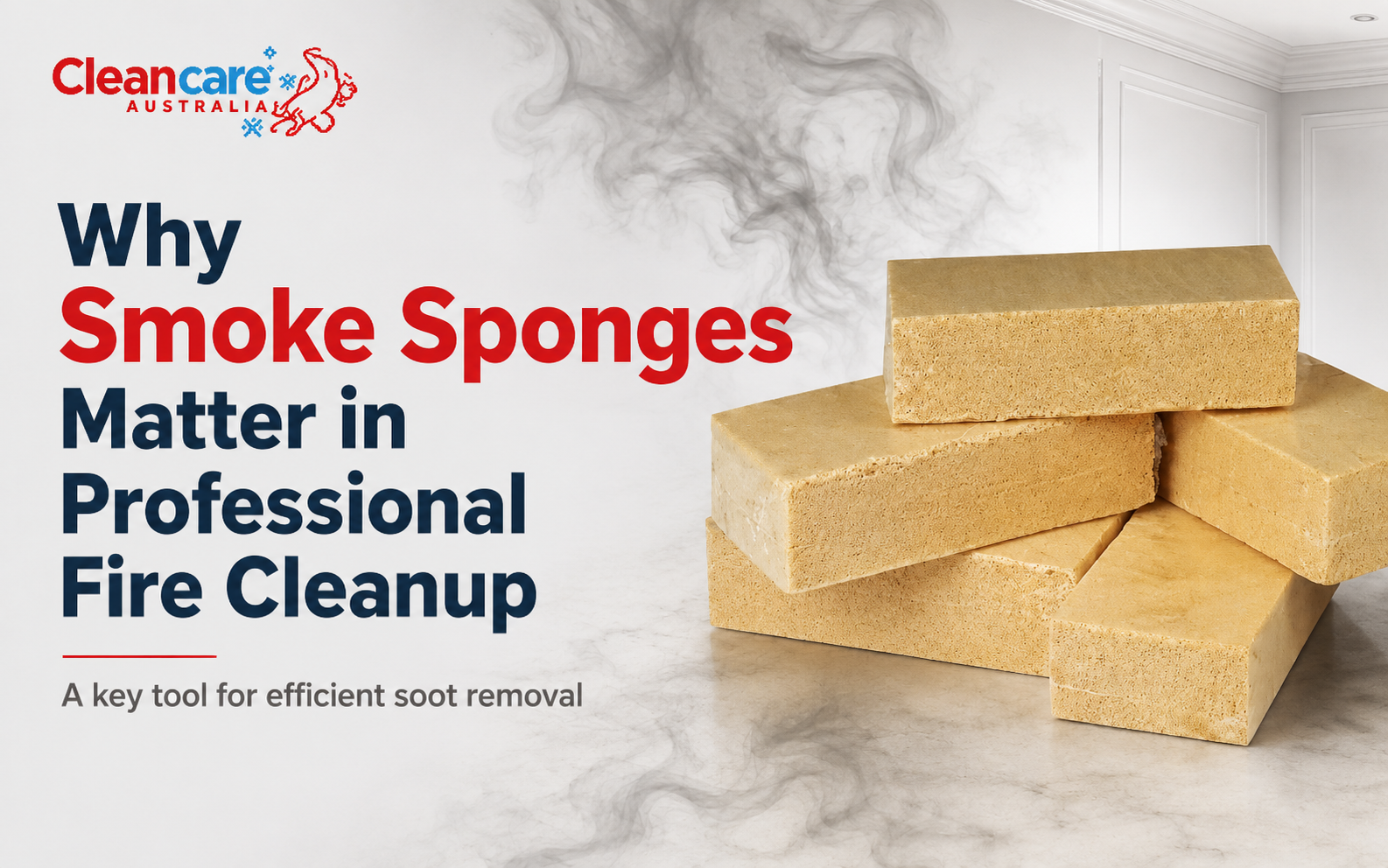
Professional fire cleanup is a detailed process that involves far more than washing visible black marks from walls. Smoke can spread through a building and leave fine contamination across walls, ceilings, fixtures and other surfaces. A smoke sponge can be an important tool during this process because it allows restoration professionals to reduce suitable loose soot without immediately introducing water.
Although simple in appearance, dry-cleaning sponges solve a specific restoration problem. They help technicians manage fine particulate contamination during the early stages of a job and can make it easier to assess what further cleaning, sealing or repair is required.
Fire Cleanup Involves More Than Soot
After a fire, restoration teams may encounter several different forms of damage.
These may include:
- Burned materials
- Loose soot
- Smoke staining
- Persistent odour
- Water damage from firefighting
- Damaged paint and coatings
- Contaminated furnishings
- Debris
- Structural damage
Because multiple problems can occur at once, professional restoration is usually carried out in stages.
Why Smoke Travels Beyond the Fire Area
Smoke moves through available air pathways.
Even if the flames were contained to one room, residue may reach nearby hallways, ceilings or rooms.
Smoke may accumulate around:
- Vents
- Doorways
- Ceiling edges
- Cornices
- Upper walls
- Window frames
- Fixtures
This is why professional cleaners inspect more than the obvious burn area.
Why Loose Soot Should Be Managed Early
Loose soot is easily transferred.
If it is not controlled, it can move through:
- Foot traffic
- Gloves
- Tools
- Cleaning cloths
- Air movement
- Equipment
The contamination can then reach surfaces that were originally cleaner.
Early particulate removal helps reduce this risk.
The Value of Dry Cleaning
Dry cleaning allows a restoration team to remove suitable loose contamination before applying liquid products.
This can be particularly useful on vertical and overhead surfaces.
Benefits Can Include
- Better control of loose soot
- Reduced early use of moisture
- Easier surface assessment
- Convenient cleaning of ceilings
- Less liquid runoff
- Simple tool handling
- Ability to work in small sections
For professional teams, these advantages can help improve workflow.
Where a Soot Sponge Fits Into the Process
A soot sponge is generally used after the site has been assessed for safety and the work area has been prepared.
It supports early surface cleaning rather than being the final restoration step.
A Typical Sequence May Include
- Assess site safety.
- Document affected areas.
- Establish containment.
- Protect unaffected materials.
- Remove appropriate debris.
- Carry out dry soot removal.
- Reassess surfaces.
- Complete additional cleaning.
- Address odour.
- Refinish or replace damaged materials.
Following a process helps teams work consistently.
How Professionals Use Chemical Sponges
Chemical Sponges are generally used with controlled strokes rather than aggressive scrubbing.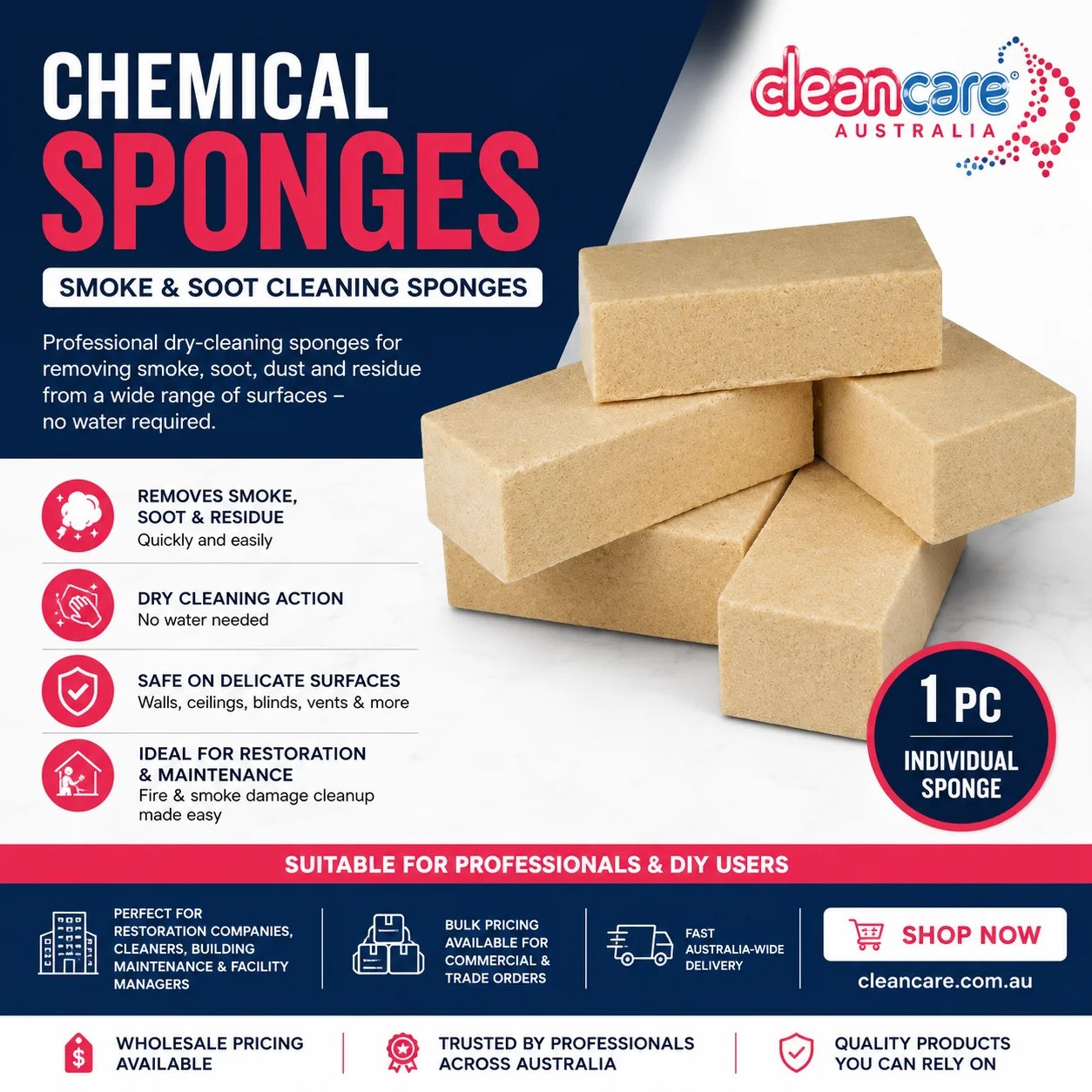
Technicians should inspect the sponge regularly because its working surface becomes contaminated.
Good Working Practices
- Start with a test patch.
- Keep the initial process dry.
- Use light pressure.
- Work in defined sections.
- Keep contaminated tools away from clean surfaces.
- Protect floors underneath the work area.
- Check progress regularly.
- Stop if a surface reacts poorly.
Professional technique can help reduce rework and accidental surface damage.
Why Surface Assessment Matters
Once loose soot has been reduced, the true condition of the material becomes easier to see.
Technicians can then determine whether the surface:
- Needs further cleaning
- Has permanent staining
- Requires sealing
- Needs repainting
- Should be replaced
- Has absorbed significant odour
This makes dry particulate removal useful not only for cleaning but also for project planning.
Residential Fire Cleanup
Residential smoke events can range from relatively small incidents to major structural fires.
Examples include:
- Kitchen fires
- Fireplace smoke
- Garage fires
- Candle-related incidents
- Electrical fires
- Heater-related smoke
Even a limited fire can create smoke contamination beyond the immediate area.
Restoration technicians therefore inspect connected rooms and upper surfaces.
Commercial Fire Cleanup
Commercial properties can involve additional complications.
A fire may affect:
- Office operations
- Retail trading
- Warehouse activity
- Hospitality services
- Tenant access
- Building maintenance
Restoration teams often need to balance cleaning quality with efficient project management.
Dry-cleaning tools can be useful because they are portable, easy to deploy and suitable for detailed work.
Contamination Control in Professional Restoration
One factor that separates professional fire restoration from basic household cleaning is worksite management.
Teams may create designated clean and contaminated zones.
This helps reduce the movement of soot.
Useful Practices Include
- Separate storage for clean tools
- Controlled waste handling
- Floor protection
- Dedicated work pathways
- Regular tool inspection
- Careful movement between rooms
These practices help maintain consistency across larger projects.
Smoke Sponges and Ceilings
Ceilings are especially important because smoke rises.
A room may have relatively light wall contamination while the ceiling shows more noticeable residue.
Dry-cleaning methods can be practical overhead because they avoid continuously applying liquid.
Safe access remains essential.
Technicians should use stable equipment and reposition themselves rather than overreaching.
Limitations of Smoke Sponges
A smoke sponge cannot solve every form of fire damage.
It is not intended to repair:
- Burned building materials
- Structural damage
- Electrical damage
- HVAC contamination
- Embedded odour
- Water damage
- Deep staining
These problems require other restoration methods.
Why Choose CleanCare Australia?
CleanCare Australia supplies professional cleaning chemicals, machinery, accessories and specialist products to commercial, industrial and domestic customers. Its range supports cleaners, facilities teams, property managers and restoration contractors carrying out a variety of cleaning tasks. Professionals seeking a purpose-made soot sponge can access a product intended for dry cleaning of smoke, soot, dust and residue from suitable surfaces. CleanCare’s broader cleaning range also helps businesses source complementary cleaning products from a specialist supplier.
Conclusion
Smoke sponges matter in professional fire cleanup because they address a specific but important part of restoration: controlled removal of loose soot. They can help technicians clean walls and ceilings, assess underlying damage and prepare surfaces for later treatment. Their effectiveness depends on correct technique, surface testing and proper contamination control. When used within a structured restoration process, they provide a practical addition to a professional fire-cleaning toolkit.